Erasmus+: Malaga, Spain – Jobshadow 04.11.2023 – 18.11.2023
November 5:
Sunday, the first day of my stay, no special program, just relaxing. Walking, seaside, getting to know the daily routine, meal times, getting ready for Monday start. Planning some afternoon programs for the 14-day stay.
November 6:
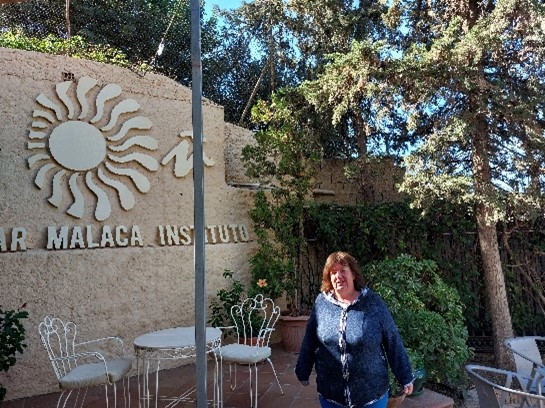
I had a meeting with the head teacher, Inmaculada Molina. She showed me around and explained the operation, methdology, historical background of the Instituto. She organised my two-week program precisely, introduced me to the teachers whose classes I visit later. I could have a look at their self-made materials, coursebooks, extra supplementary materials and the digital materials as well. It must have been a big load of work but by now they have finished and got a terminology for each week, each level, day by day, well planned and well prepared, She also mentioned that the teachers have been working here for 2-3 decades, very loyal and committed, that is great to hear. All I could feel everywhere is the atmosphere of security, reasonableness, well-established background with much experience but it is also a very flexible, student.friendly system. The accommodation facilities at the hotel and the very well organised system of having meals on the spot are also provided at a high quality level.
November 7-8:
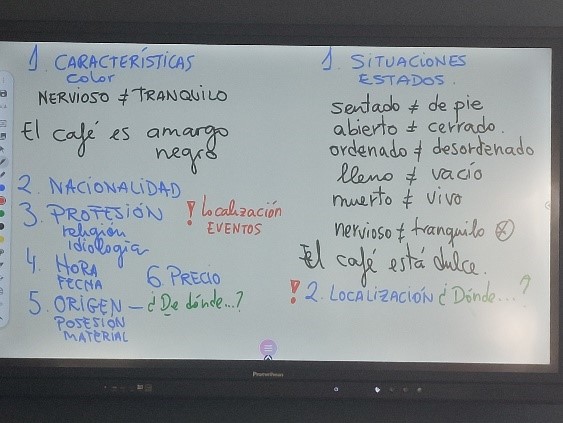
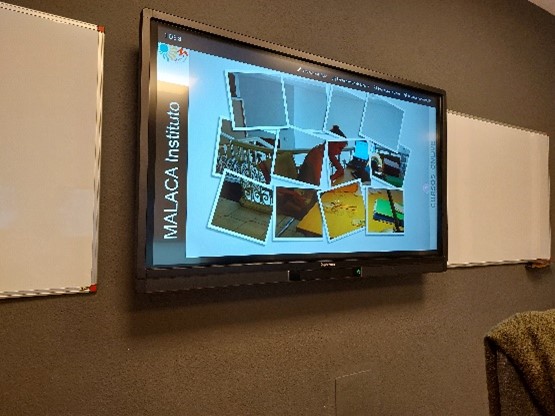
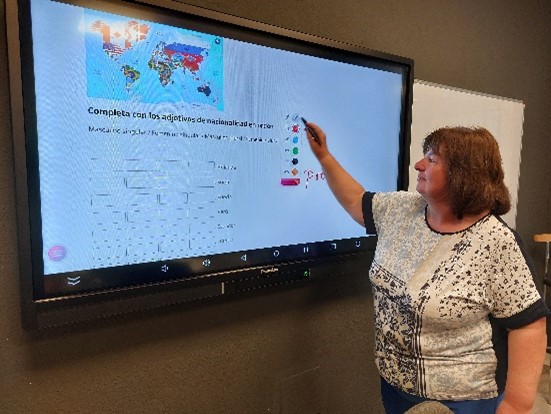
Observation: I could spend the day with beginner-level students. The 10 members come from different countries, different age-groups. The teachers use only Spanish in the classroom. The promethean digital screen is used to project the whole material and the teacher also can write synonyms, antonyms, explanations, she even draws if necessary as it were a whiteboard. Students often take pictures, they don’t need to take notes. So they can pay attention to the others, tot he teacher, to all explanations. If there is frontal work, there is much personalization. (Nationality, date of birth, favourite colour, etc.), but there are also group and pair activities.
There are two sessions-50-50 minutes- together and a 40-minute break, then the groups and the teachers change. It is also very good to keep their attention and motivation.
November 9-10:
I got the chance to visit beginner Spanish classes where the digital material was demonstrated by the teacher who had prepared it for all 5 levels -A1,A2,B1,B2,C1.
It was a great experience to see how the files of thousands of materials, excercises, practice tasks are structured in an absolutely logical way.
I could fulfill the beginner tasks, see, how varied they are and how enjoyable it can be for our students-learning like it was a game. The four skills are taught separately and also combined, grammar is shown and practised through communicative methods.
November 11:
Trip to Cordoba, the magnificent historical city, visiting the most famous sights, e.g. Mezquita de Cordoba, with the catholic church inside and the Royal Palace with its beautiful garden, fountains, sculptures, ornamental trees.
November 12:
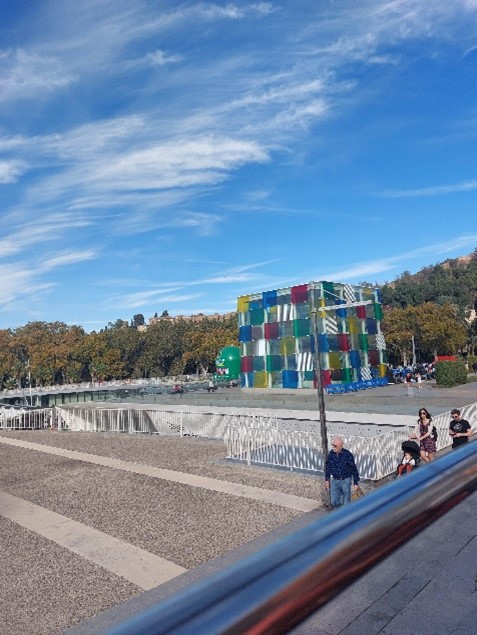
Sightseeing (Hop on hop off bus) in Malaga, visiting the Gibralfaro, the Alcazaba, the Cathedral, Costa del Sol, Picasso Museum, Carmen Thyssen Museun, etc.
November 13:
New groups, based on the test on the previous Friday, the students are reorganised in different groups, so in most cases they study with some new classmates. The next level books are in their hands but they mostly get the language-vocabulary, functions, explanations, grammatical items, exceptions, regular/irregular verbs etc. from the teachers, who are absolutely professionals, loving their job and doing it at a master level. The teachers do not use other language than Spanish, they explain everything through gestures, drawing, mimiques, giving synonyms, antonyms, etc.
November 14:
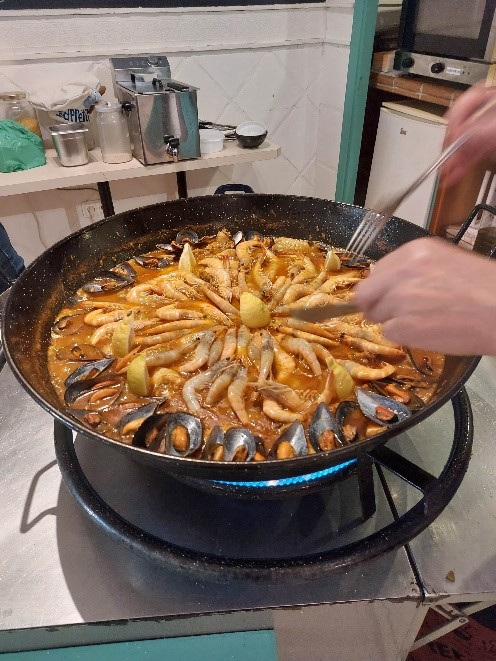
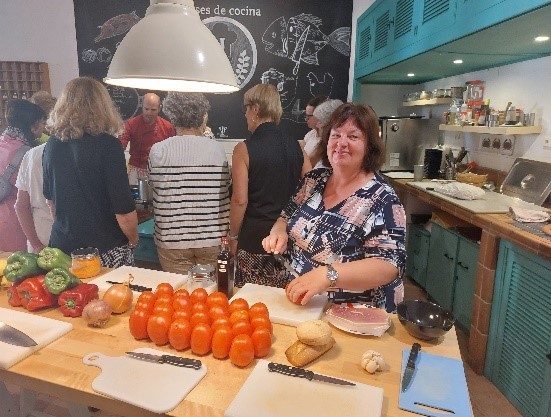
Activities outside the classroom: Cooking class. We made Gazpacho – the famous tomato soup, second course Paella, and Dessert. It was a great group-building activity too, we ere talking with each other, showing pictures about our hometowns, families, and we had a substantial, delicious meal together😊
November 15:
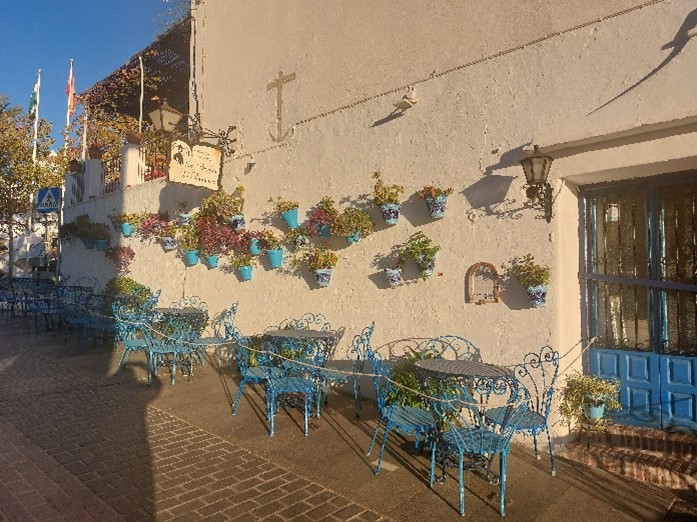
Activities outside the classroom: Trip to Mijas, a beautiful mountain village with typical Andalusian houses.
November 16:
Activities outside the classroom: Cultural activity tour – an after-class event, guided in Spanish. Topics: Cultural background, the birthplace of Picasso, his life and work, other cultural events, shows.
November 17:
With the head-teacher: Feedback on the two-week stay, talking about our great experiences, methodological renewal, the observed new approaches to teaching and learning a language in the native country, how to make the whole process easier, how to keep the learners motivated by applying extra (cultural, everyday life, historical), even outside the classroom materials, methods.
As far as I can see, it is always a very important feature of teaching a foreign language to be up-to-date, to be tolerant, to be many-sided, to take into account the learners’ needs, to bring new methodology-even digital-in the classroom, to leave the classroom if possible and motivate the students to use the foreign language-no matter, with how many mistakes – in each and every situation they can.